Report
Solution
Introduction
Tesco is one of the biggest retail chains operating in the UK (Woods, 2008). However, rise in competition from Aldi and Lidl has resulted in consumer diversification as a result of which, Tesco’s market share is declining. Aldi and Lidl has developed cut price chains which has attracted the customers from various segments. In this regard, Tesco is planning to develop discounted grocery chain stores which will have a limited product range. In this report, a marketing plan has been developed in light of the new strategy mentioned above.
Proposed Mission Statement
The main aim of Tesco is to attract lost customer segments by offering them products at a low price and hence gain a competitive advantage in the industry. The mission statement of Tesco is to serve the people of Britain a little better, everyday (Tesco, 2018).
Marketing Objectives
Marketing objectives refers to what the company wishes to achieve after implementing its marketing strategy. In this marketing report, marketing objectives have been developed using SMART (specific, measurable, achievable, realistic and time-bound) criteria.
- 1. To increase the market share by 15% within 2 years after discounted grocery chains start operating in the British market.
- 2. To increase the sale by 20% within 2 years of business operations after discounted grocery chains start operating in the British market
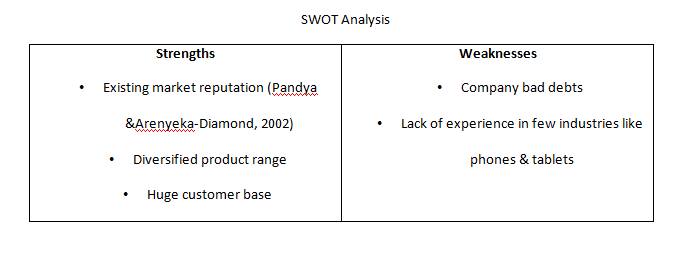
- Strengths: Strengths refers to the major pros or activities of a business organization which facilitate the growth of business and hence achievement of the marketing and company objectives. The main strengths of Tesco include existing market reputation of the business due to many years of operations in the UK market. In addition to this, the presence of wide loyal customer base is also a major strength for the company.
- Weaknesses: Some of the major weaknesses of Tesco include high bad debts of the company and lack of experience of top management in phone and tablet industry.
- Opportunities: Opportunities refers to things which the company can do in order to gain a competitive edge in the market and to achieve organizational objectives. There are several opportunities available to Tesco which can be used, these includes extensive use of social media for promotion, and implementation of discounted price strategy in order to attract various customer segments.
- Threats: Rising competition from Aldi, Lidl, Morrison and ASDA is one of the prime threat for Tesco. Along with this, low priced grocery stores developed by Aldi and Lidl are only increasing the competition.
Porter’s 5 Forces Analysis
Buyer’s Bargaining Power: The bargaining power of customer is moderate because the switching cost for the customer is low but at the same time it should also be noted that the number of options which are available to the customers are also limited.
Supplier’s Bargaining Power: The bargaining power of the suppliers is identified to low. This is because the numbers of suppliers that are operating in the UK market are more than the number of organizational buyers. This giver more power to the company and less power to the suppliers.
Threat of New Entrants: The threats of new entrants in the retail chain industry is low. This is because of the amount required by a new venture to operate at such a level in the UK would be high and hence the entry in this industry is restricted.
Availability of Substitute Products: Along with this, it has also been identified that the availability of substitute products is high because there are several organizations operating in the retail grocery chain industry which offers closely related and substitute products.
Existing Industry Rivalry: The existing industry rivalry is high. There are several competitors that are operating the in the UK grocery industry. Some of the main players in the market are ASDA, Aldi and Lidl.