Question & Answer
Questions
This assessment aims to develop and gauge student understanding of the key topics covered so far by answering the following questions. Answering these questions will help you build some understanding for the next assessment item as well as for the entire subject. It is expected that answers to the assignment questions be succinct (i.e. precise and concise) with all sources of information fully referenced as per APA referencing style. You have to reference the text book and any additional material you have used in your answers.
Note that the guide for APA referencing is provided in the resources section of Interact site of this subject.
Answers MUST be written in your own words. No marks will be awarded for any answer that contains more than 10% direct quote (referenced or unreferenced). One or two sentence answers will be too short and only receive low marks. Answers longer than 1.5 pages (12 point font, single line spacing) may incur a penalty if too much non-relevant information is stated. For mathematical questions it is expected that you show intermediate steps of your working. Just stating the correct solution will result in low marks, on the other hand if the working is correct and you only made minor mistakes, you will still be awarded marks, even though the final answer is wrong.
-
Question 1 [3 Marks] :
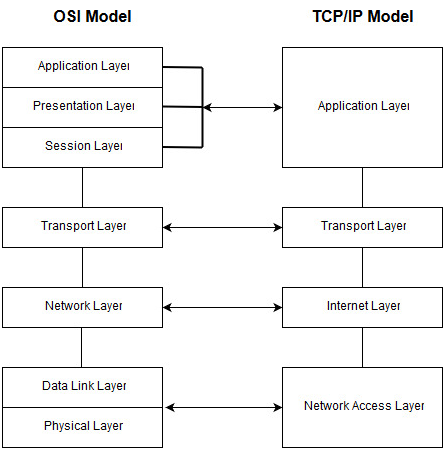
Briefly describe the OSI reference model and the TCP/IP networking model, use diagrams to show the relation between both these models.
-
Question 2 [3.5 Marks] :
Complete the following Hands-On Projects from the prescribed textbook (Pyles, Carel Tittel 2017, pages 37-45). In order to complete this activity, students should insert screenshots in the assignment document along with a short description of each step taken to complete the project. Students must also answer any relevant questions highlighted in step-by- step description of the above mentioned hands-on projects in the textbook
-
Question 3 [3.5 Marks] :
a. Describe the role ARP Cache plays in establishing Address Resolution Protocol (ARP)? [2 Marks]
b. Complete Hands-On Project 4-1 from the prescribed textbook (Pyles, Carel Tittel 2017,page 241) [1.5 Marks]
-
Question 4 Case study task [5 Marks] :
In your role as a Solutions Architect at Riverina IT Solutions, you are leading a team of several system administrators. Riverina IT Solutions is a medium sized organisation and is currently expanding its operations. The company has acquired six sites across regional New South Wales to accommodate its various departments. You have been asked to design a network by utilizing 10.0.0.0 private IP address. The designed network should span six sites with a router at each site to interconnect the entire network. It is assumed that each site will have its own single subnet. Company expects approximately 1100 workstations across all the sites with approximate numbers in each building as follows:
Solution
Answer-1:
OSI Reference Model
OSI – Open System Interconnection is reference model made up of 7 layers.
- 1. Physical Layer
- 2. Data Link Layer
- 3. Network Layer
- 4. Transport Layer
- 5. Session Layer
- 6. Presentation Layer
- 7. Application Layer
1. Physical Layer: Physical Layer transfer bits stream from source to destination via physical media such as cable or waves in form of light, radio wave or electrical impulse. Some network devices like hubs and repeaters work on physical layer.
2. Data Link Layer: The Data link layer is made up of 2 sublayers which are Media Access Control (MAC) and Logical Link Control (LLC). Data link layer encodes and decodes data packets into bits.
3. Network Layer: Network layer provides technologies like routing and switching. It transmits data from one node to another by creating logical paths. Devices like router and some switches capable of routing works on Network layer.
4. Transport Layer: Transport layer converts data into segments. It does the work of end to end delivery of message. This layer also provides acknowledgment of successful data delivery and acknowledgment of error if found so that data can be resent.
5. Session Layer: This layer as the name suggests manages sessions, which includes establishment, maintenance and termination of session. It also responsible for establishment of connection, authentication and security.
6. Presentation Layer: This layer translates network data to application data and vice versa. This layer is responsible for representation of data and encryption-decryption of the data.
7. Application Layer: Application layer is on top of the stack because it communicates directly with users and applications. There are many services like quality of service (qos), authentication and privacy are identified at this layer.